🌸 KANSAI LOCAL FAVORITES
10 Kansai Spots I Truly Love (Beyond the Guidebooks!)
Kyoto, Osaka, Nara & Hyogo – temples, pork buns, deer, hot springs & anime islands, all personally tested.
Most Kansai guides list the same famous spots. This one is different! Every place below was chosen because I personally visited and had a great time – not just because it appears on the big travel sites. (There’s one exception: one spot is still on my own bucket list, and I’ll tell you which!)
To make planning easy, the spots are grouped by prefecture: Kyoto, Osaka, Nara and Hyogo. All travel times and prices are counted from Kansai International Airport (KIX), so you can plan your route from the moment you land.
💡 Key Point
Travel times and fares in this article are approximate. Prices and timetables change, so please check the latest information on Google Maps or a train-navigation app before you go.
⛩️ Kyoto Prefecture
Japan’s ancient capital, and home to the most iconic shrine scenery in the country.
No. 1
Fushimi Inari Taisha
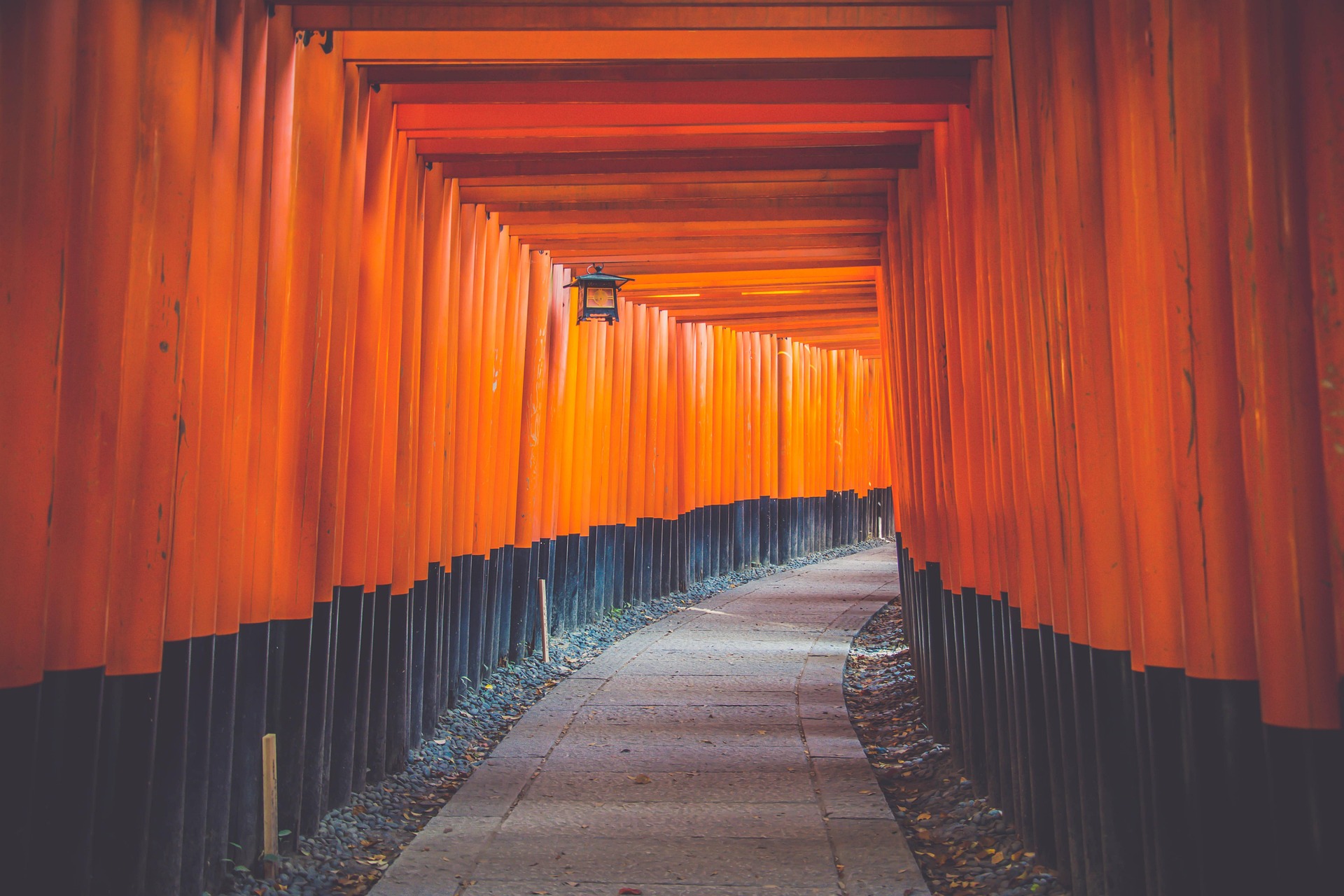
Fushimi Inari Taisha is the head shrine of the many Inari shrines across Japan, dedicated to the deity of rice, business and prosperity. It sits at the foot of Mt. Inari in southern Kyoto, and it’s free to enter and open 24 hours a day. When people think of Kyoto, this is the place that comes to mind. Kyoto has many other amazing sights, like Kiyomizu-dera and Arashiyama, but for me, Fushimi Inari felt the most “Japanese” of them all.
The star of the show is the Senbon Torii (“thousands of torii gates”): bright red gates packed so closely together that the path feels like a glowing tunnel. Each gate was donated by a person or a company, and their names are written on the back. Along the way you’ll also meet stone fox statues, because foxes are believed to be messengers of Inari, and some of them hold a key in their mouths. Keep climbing and you’ll reach the Yotsutsuji intersection, where a gap in the trees opens up a wide view over Kyoto city.
What I loved most is that it’s not just a photo stop. It’s a real walk up a sacred mountain. The higher you go, the fewer people you meet, the city noise fades away, and you’re surrounded only by forest and red gates. It felt like stepping into another world.
👍 What I Recommend Doing
- ✅ Walk through the Senbon Torii early in the morning or after dark for fewer crowds
- ✅ Hunt for the fox statues and see what each one holds in its mouth
- ✅ Hike to the Yotsutsuji viewpoint (roughly 40 minutes up) for the city view
- ✅ Grab a snack from the food stalls near the entrance before or after your walk
⏱️ Total: approx. 1 hr 30 min | 💴 Fare: approx. ¥3,500–4,000
🍢 Osaka Prefecture
Japan’s food capital, with big city fun, hands-on museums and a piece of Expo history.
No. 2
Dotonbori
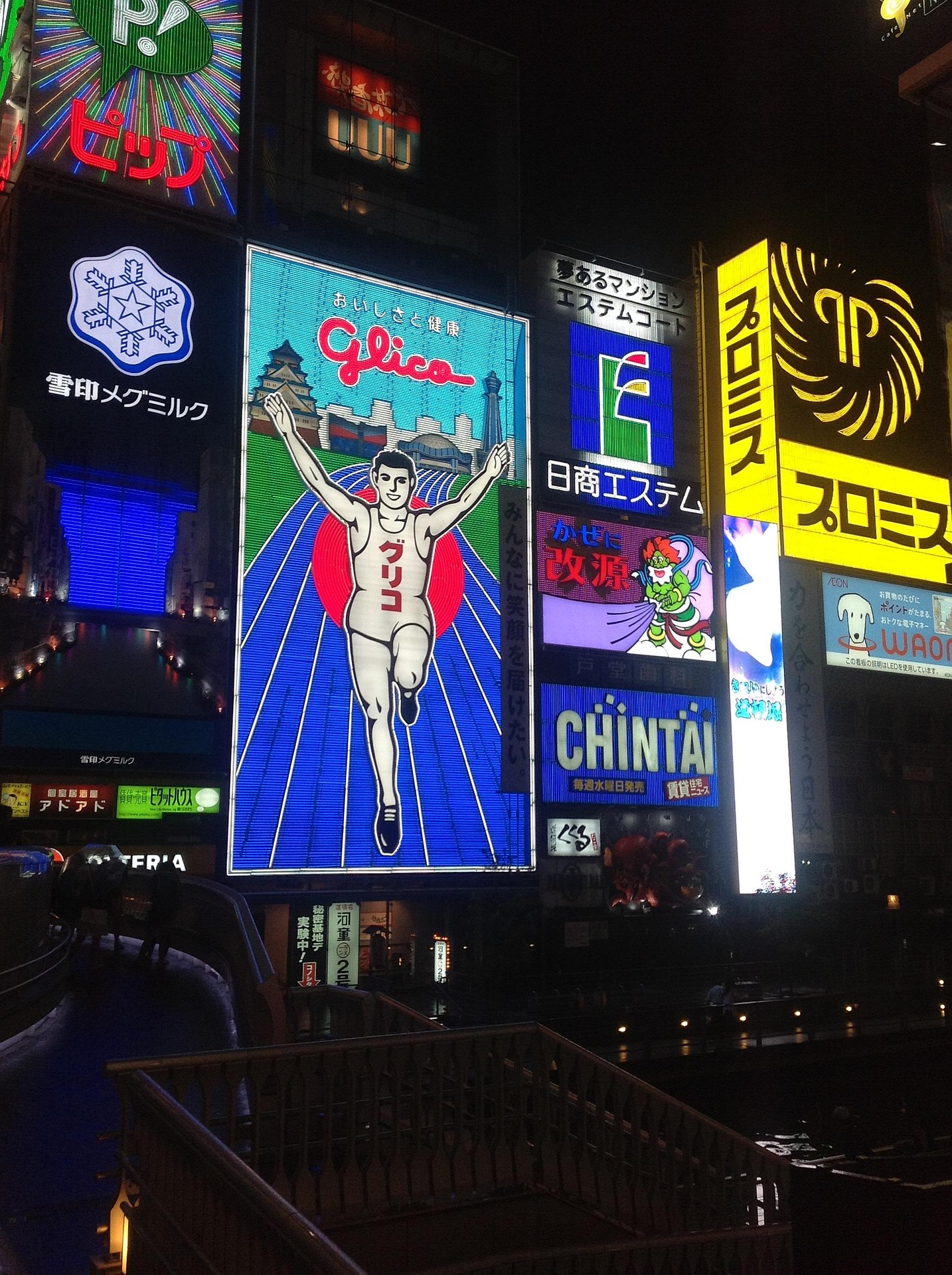
Dotonbori is the entertainment and food heart of Osaka’s southern downtown, stretching along the Dotonbori canal. It’s loud, bright and packed with people, and it comes alive at night when the neon lights reflect on the water. Osaka people say “kuidaore”, which means “eat until you drop”, and this street is where that spirit lives.
Look out for the famous Glico Running Man sign, the giant mechanical crab of a seafood restaurant, and all the huge, funny signboards that make the street feel like a theme park. The classic photo spot is Ebisu Bridge, right in front of the Glico sign. Food-wise, this is the place to try takoyaki (octopus balls), okonomiyaki (savory pancake) and kushikatsu (deep-fried skewers, and remember: no double-dipping in the shared sauce!).
My tip is to go around sunset and stay until night. You get to see the street change from busy daytime to a glowing neon world. Share dishes with your travel buddies so you can taste more things, and treat the whole walk like a food tour. Of course there’s one more thing I never skip:
🥟 Don’t Miss: 551 HORAI Pork Buns
551 HORAI’s butaman (steamed pork buns) are a true Osaka legend. You can hardly buy them in Tokyo, and they are hugely popular even among Japanese people. Fluffy dough, juicy pork filling – so good!
Personally, their shumai (steamed dumplings) are just as delicious. I always buy a butaman + shumai set, no exceptions!
You can also buy them at stations such as Shin-Osaka. Just a heads-up: the smell is strong, so I recommend eating them at your home or hotel rather than on the train.
👍 What I Recommend Doing
- ✅ Take your photo with the Glico sign from Ebisu Bridge
- ✅ Eat your way along the street: takoyaki, okonomiyaki and kushikatsu
- ✅ Come back after dark to see the neon at its best
- ✅ Buy a butaman + shumai set from 551 HORAI to enjoy at your hotel
⏱️ Total: approx. 1 hr | 💴 Fare: approx. ¥970–1,450 (Rapi:t costs more)
No. 3
Cup Noodles Museum Osaka Ikeda

Instant noodles were invented in Japan, and this museum in Ikeda City, Osaka, is dedicated to the inventor, Momofuku Ando, and his creative spirit. Instead of just reading panels behind glass, you get to experience the story with your own hands. It’s a great stop for families, couples and anyone who loves food.
The highlight is My Cup Noodles Factory, where you can create your very own original Cup Noodles. You decorate the cup with markers, choose your soup and pick your toppings, and then watch it get sealed up. There is also the Instant Noodles History Cube, a wall packed with packages from the history of instant noodles, and a Chicken Ramen Factory where you can make noodles from scratch (advance reservation is required, so check the official website).
Honestly, I was surprised how much fun the decorating part was. It’s the kind of activity where you become a kid again, and you leave with a one-of-a-kind souvenir that’s also a snack. Carrying your own creation home feels special.
👍 What I Recommend Doing
- ✅ Design and make your own original Cup Noodles
- ✅ Walk through the History Cube and learn how instant noodles changed the world
- ✅ Reserve the Chicken Ramen Factory in advance if you want to make noodles by hand
- ✅ Check opening days and reservation rules before you go
⏱️ Total: approx. 1 hr 30 min | 💴 Fare: approx. ¥1,500
No. 4
LaLaport EXPOCITY
LaLaport EXPOCITY is a huge shopping and entertainment complex in Suita, Osaka, built next to the former site of the 1970 Osaka World Expo. It’s one of the biggest complexes of its kind in Japan, so it’s easy to spend a whole day here without getting bored.
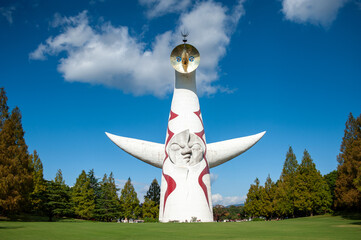
Inside you’ll find a big mix of fashion and lifestyle shops, restaurants and food courts, and entertainment such as an aquarium and a giant Ferris wheel that lets you see across the area. Just outside is the Expo Commemoration Park, where you can see the Tower of the Sun, the iconic symbol of the Expo. Its strange, powerful shape looks amazing in person, and it’s a fun contrast to the modern mall next door.
My favorite way to enjoy it is to make it a relaxed “do-everything” day: shop in the morning, have a long lunch, visit the Tower of the Sun, then finish with the Ferris wheel. It’s also a good rainy-day choice because so much is indoors. Fireworks are held in some seasons, so please check the official website for the latest event information.
👍 What I Recommend Doing
- ✅ Take a photo of the Tower of the Sun in the Expo Commemoration Park next door
- ✅ Ride the giant Ferris wheel for a view over the area
- ✅ Shop and eat your way through the complex for a relaxed full day
- ✅ Check the official website for seasonal events and fireworks
⏱️ Total: approx. 1 hr 30 min – 2 hrs | 💴 Fare: approx. ¥1,800–2,200
🦌 Nara Prefecture
An ancient capital where deer and giant temples share the same park.
No. 5
Nara Park & Todai-ji Temple
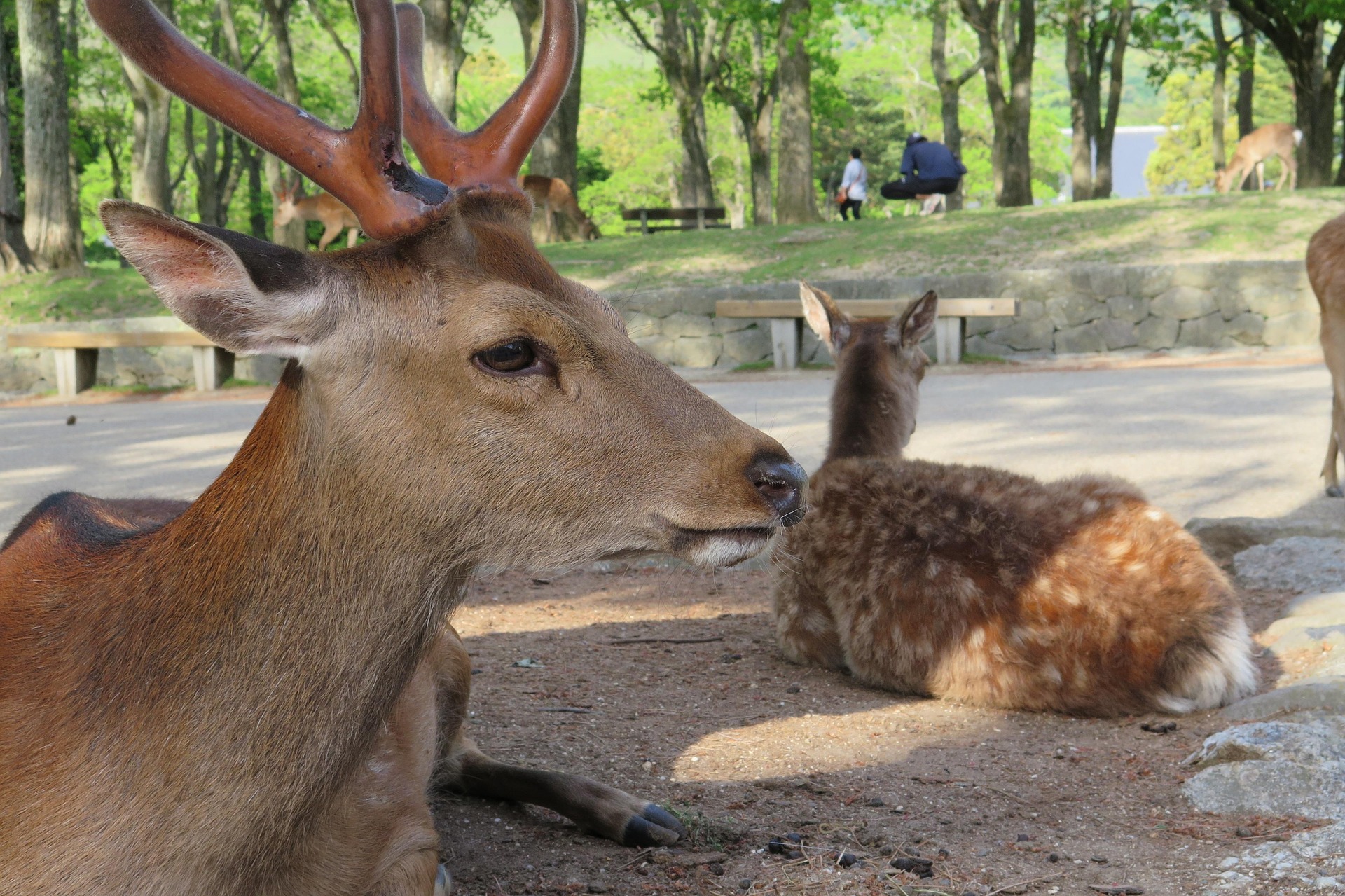
Nara was one of Japan’s earliest capitals, and Nara Park is a wide, green park in the middle of the old city. The park is home to more than a thousand deer, and in Nara, deer are considered messengers of the gods. That’s why they roam freely and are treated with great respect. Right inside the park you’ll find Todai-ji Temple, one of Japan’s most famous temples.
The biggest joy here is meeting the deer. Buy a bundle of deer crackers and hold one out, and many deer will bow to you before they eat. It’s adorable, and it never gets old! Then step inside Todai-ji’s Great Buddha Hall, one of the world’s largest wooden buildings, to see the giant bronze Buddha. Its size is hard to imagine until you stand in front of it. Look for the pillar with a hole at its base, said to be the same size as the Buddha’s nostril, and if you’re small enough to crawl through, it’s said to bring good luck.
A fun fact: some people even try the deer crackers themselves. Honestly, they don’t taste good at all, so I suggest just a tiny nibble for the story. 😆 My tip is to walk slowly through the park, because the deer, the tall trees and the old temple gates together give Nara a calm, timeless feeling that’s very different from Osaka or Kyoto. If you have extra time, keep walking to Kasuga Taisha Shrine, famous for its stone and bronze lanterns.
⚠️ Good to Know
The deer are wild animals. Keep snacks hidden until you’re ready to feed them, and never tease or pull on them. Only buy the official deer crackers sold in the park.
👍 What I Recommend Doing
- ✅ Feed the deer and wait for their famous bow
- ✅ See the Great Buddha at Todai-ji Temple
- ✅ Try the pillar hole (if you can fit!) for good luck
- ✅ Nibble a deer cracker, just a tiny bit
⏱️ Total: approx. 1 hr 45 min | 💴 Fare: approx. ¥1,700–2,000
🏯 Hyogo Prefecture
From a snow-white castle to hot springs, a free-roaming zoo and an anime island: Hyogo is full of variety.
No. 6
Himeji Castle
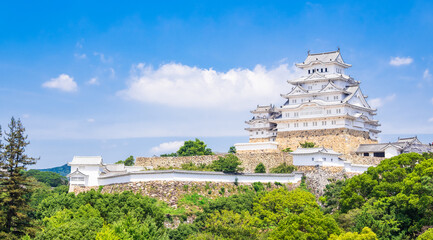
Most Japanese castles are gray or dark, but Himeji Castle is rare and stunning: pure, brilliant white. That’s why it’s nicknamed the “White Heron Castle”, as it looks like a bird spreading its wings. It’s a UNESCO World Heritage Site and one of Japan’s best-preserved original castles, not a modern reconstruction.
The first “wow” comes before you even enter. Walk straight down the main street from Himeji Station and the castle slowly grows in front of you. Inside the main keep, you climb steep wooden stairs through several floors, and along the way you’ll spot clever defensive features such as stone-drop windows and small openings for arrows and guns. From the top floor, you can look out over the city of Himeji, and it’s easy to imagine samurai doing the same centuries ago. You’ll take off your shoes at the entrance and carry them in a bag, which is part of the fun.
My tip is to give it at least half a day. Walk around the castle grounds first, then explore inside, and finish at the neighboring Koko-en Garden, a group of Japanese gardens where you can rest and see the castle from another angle. In cherry blossom season the castle grounds are especially beautiful, but also very crowded.
👍 What I Recommend Doing
- ✅ Take a photo of the castle from the main street in front of the station
- ✅ Climb all the way to the top floor of the main keep
- ✅ Relax in Koko-en Garden after your visit
- ✅ Wear shoes that are easy to take off
⏱️ Total: approx. 2 hrs | 💴 Fare: approx. ¥3,500–4,500
No. 7
Kobe Animal Kingdom
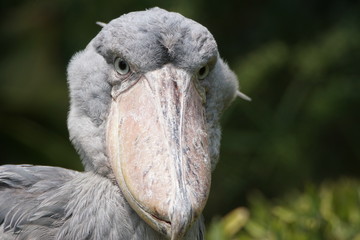
Kobe Animal Kingdom is a “free-roaming” zoo on Port Island in Kobe. Many animals live in open spaces with no bars between you and them, so you can watch them up close in a very natural way. I honestly think it’s the best zoo in Kansai, and kids will absolutely love it!
The zoo mixes indoor and outdoor areas, and there are lots of chances to get close to animals and birds. Depending on the day, you can also enjoy feeding experiences and animal shows. Some areas let you interact with animals more directly, but whether you can touch an animal depends on the animal and the area, so always follow the guidance of the staff and the signs. The animal lineup can change, so check the official website for the latest information.
One of my favorite things about this place is that much of it is indoors, so it’s a great plan even when it rains. For a family trip, that’s a huge relief. Plan around half a day to a full day, and leave time for the shows and the feeding experiences, because those are often the moments kids remember most.
⚠️ Good to Know
Whether you can touch an animal depends on the animal and the area. Please always follow the staff’s instructions and the signs.
👍 What I Recommend Doing
- ✅ Get close to the animals in the open, bar-free areas
- ✅ Join a feeding experience or animal show if one is on
- ✅ Make it your rainy-day plan, since much of it is indoors
- ✅ Bring the kids: it’s perfect for families
⏱️ Total: approx. 1 hr | 💴 Fare: approx. ¥2,200–2,500
No. 8
Arima Onsen
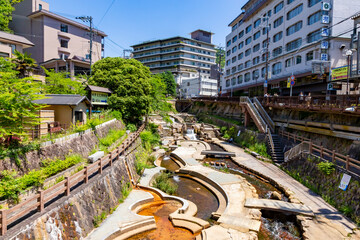
If you say “hot spring” in Kansai, this is the classic. Arima Onsen is one of Japan’s oldest and most famous hot spring towns, tucked into the mountains behind Kobe. It has a cozy old-town atmosphere with narrow lanes, traditional inns and small shops.
Arima is known for its two types of water. The “Kin-no-Yu” (Gold Water) is a reddish-brown, mineral-rich spring, and the “Gin-no-Yu” (Silver Water) is a clear one. Here’s the fun part: if you dip a towel in the Gold Water, it always turns a reddish-brown color. (Don’t worry, it’s not real gold! 😄) The town is also perfect for street-food strolling, and one famous local snack is the carbonated-water cracker.
My tip is to plan a slow half-day: walk the lanes and snack first, then soak, then rest at a foot bath or café. Try both types of water if you can, so you can feel the difference yourself. Access is also easy, because buses run from Kobe-Sannomiya, so it works great as a day trip from the city.
⚠️ Good to Know
Wash your body before entering the bath, and keep your towel out of the water. Some baths have rules about tattoos, so please check in advance on the official website.
👍 What I Recommend Doing
- ✅ Soak in both the Gold Water and the Silver Water
- ✅ Dip your towel in the Gold Water and watch the color change
- ✅ Snack your way along the lanes
- ✅ Relax at a foot bath after walking
⏱️ Total: approx. 2 hrs 30 min | 💴 Fare: approx. ¥3,000
No. 9
Kinosaki Onsen
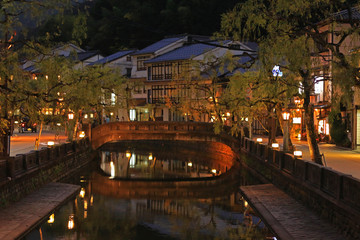
Kinosaki Onsen is a small, charming hot spring town in northern Hyogo, close to the Sea of Japan. A quiet river lined with willow trees runs through the center, with wooden inns and old-style shops on both sides. It’s just as famous as Arima, and honestly, I like it even more. Tastes differ, so pick whichever one calls to you!
The town’s signature experience is hopping between its seven public bathhouses. Guests wear a yukata (light cotton robe) and wooden sandals, and stroll from bath to bath along the river. It’s a classic hot spring town experience, especially in the evening when the lanterns are lit. If you’d like a view, you can also take a ropeway up the mountain behind the town.
And here’s my favorite reason to go: winter. In the cold season, the town is famous for fresh crab, and it is absolutely delicious. 🦀 Warm baths plus a crab dinner on a snowy night is hard to beat. Because Kinosaki is far from the airport, I recommend staying at least one night so you can enjoy the baths slowly. It’s also easy to reach: a direct limited express train runs from Osaka.
👍 What I Recommend Doing
- ✅ Stay overnight and hop between the public baths in a yukata
- ✅ Stroll along the willow-lined river in the evening
- ✅ Eat fresh crab in winter
- ✅ Take the ropeway for a view over the town
⏱️ Total: approx. 4 hrs | 💴 Fare: approx. ¥7,000–8,000
No. 10
Nijigen no Mori (Awaji Island)
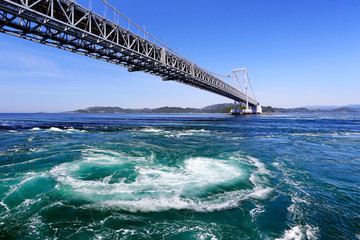
Here’s my honest confession: this is the one spot I haven’t visited yet, but it’s high on my must-go list! Nijigen no Mori is an anime and game theme park on Awaji Island, celebrating what Japan does best. It’s set in a large park surrounded by nature, so the characters and stories you love come to life in real space.
The park features attractions based on famous Japanese franchises such as NARUTO and Dragon Quest. If you grew up with Japanese anime and games, this is the kind of place where you can become part of the story. I can’t wait to walk around it myself, and I’ll update this article after I do! The lineup of attractions can change, so please check the official website for the latest information.
Even the journey is part of the adventure. Awaji Island is reached by crossing the Akashi Kaikyo Bridge, one of the longest suspension bridges in the world. The view from the bridge is fantastic, and honestly worth the trip on its own. If you love Japanese anime and games, please go, and tell me how it was!
⚠️ Good to Know
A car makes the trip much easier, but buses are available too. Please check the bus timetable in advance.
👍 What’s on My Must-Do List
- ✅ Explore the NARUTO and Dragon Quest attractions
- ✅ Cross the Akashi Kaikyo Bridge and enjoy the view
- ✅ Check the bus timetable (or rent a car) before you go
- ✅ Visit the official website for the latest attraction information
⏱️ Total: approx. 3 hrs | 💴 Fare: approx. ¥3,500–5,000
📋 Quick Comparison (From KIX)
🎒 Travel Tips Checklist
- ✅ Get an IC card (like ICOCA) for easy train and bus rides
- ✅ Wear comfortable shoes – you’ll walk a lot!
- ✅ Carry some cash, as small shops often don’t accept cards
- ✅ Check opening days and reservation rules on each official website
- ✅ Visit popular spots early to avoid the crowds
Ready to Explore Kansai? 🌸
These are the places that made my Kansai memories special. I hope they make yours special too!
🚆 COMING SOON
Step-by-Step Train Guides Are on the Way!
Getting around Kansai by train can feel confusing at first, with several railway companies, different platforms and many transfers. To make your trip stress-free, I’m preparing separate blog posts with detailed train and bus guides for the routes in this article.
Each guide will show you how to get from Kansai International Airport (KIX) to the spots above, which trains to take, and what to watch out for along the way. I’m planning guides for these routes:
- 🚆 KIX → Kyoto (Fushimi Inari)
- 🚆 KIX → Osaka (Dotonbori, Cup Noodles Museum, EXPOCITY)
- 🚆 KIX → Nara
- 🚆 KIX → Himeji, Kobe, Arima Onsen & Awaji Island
- 🚆 Osaka → Kinosaki Onsen
The links will be added here as soon as each guide is published. Please bookmark this page and check back soon!